

As a dedicated supplier of die cut parts, I've had the privilege of witnessing the ever - evolving demands and applications of these precision - crafted components. One crucial aspect that often comes under scrutiny is the puncture resistance properties of die cut parts. In this blog, I'll delve deep into this topic, exploring what puncture resistance means, the factors influencing it, and how it impacts different industries.
Understanding Puncture Resistance
Puncture resistance refers to a material's ability to withstand the force exerted by a sharp object trying to penetrate it. In the context of die cut parts, this is a vital characteristic, especially in applications where the parts are exposed to potential puncturing threats. For instance, in industries like automotive, aerospace, and electronics, die cut parts may encounter sharp edges, tools, or even debris during manufacturing, assembly, or operation.
When a die cut part has high puncture resistance, it can maintain its integrity, functionality, and appearance. This not only ensures the longevity of the part but also contributes to the overall safety and performance of the product in which it is used.
Factors Affecting Puncture Resistance
Material Selection
The choice of material is perhaps the most significant factor influencing the puncture resistance of die cut parts. Different materials have varying degrees of inherent strength and flexibility, which directly affect their ability to resist punctures.
- Acetate Cloth: Acetate cloth Acetate Cloth is a popular choice for die cut parts in many industries. It offers a good balance between flexibility and strength. The fibers in acetate cloth are woven in a way that distributes the force of a puncturing object over a larger area, reducing the likelihood of penetration. However, compared to some synthetic materials, its puncture resistance may be relatively lower.
- Waterproof Breathable Membrane: Waterproof breathable membranes Waterproof Breathable Membrane are often used in applications where both water - resistance and breathability are required, such as in outdoor clothing and electronic enclosures. These membranes are typically made of polymers that are engineered to have a dense structure. This density helps in providing a high level of puncture resistance while still allowing for the passage of water vapor.
- Die Cut Graphite Sheet: Die cut graphite sheets Die Cut Graphite Sheet are known for their excellent thermal conductivity. In terms of puncture resistance, graphite sheets can vary depending on their thickness and the manufacturing process. Thicker graphite sheets generally have better puncture resistance as they can absorb more energy before being penetrated.
Material Thickness
The thickness of the material also plays a crucial role in determining puncture resistance. Generally, thicker materials are more resistant to punctures because they provide more layers of material for the puncturing object to penetrate through. However, increasing the thickness may not always be a viable option, especially in applications where weight and space are limited.

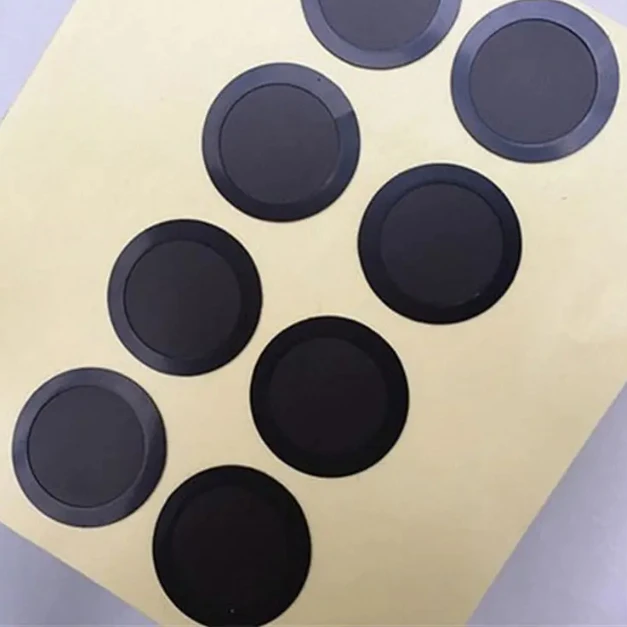
For example, in the electronics industry, die cut parts need to be as thin as possible to fit into compact devices. In such cases, manufacturers often have to find a balance between thickness and puncture resistance by choosing high - strength materials.
Manufacturing Process
The die cutting process itself can impact the puncture resistance of the parts. A well - executed die cutting process ensures that the edges of the part are clean and free from any damage or weak points. If the die cutting process is not precise, it can create micro - cracks or rough edges, which can act as initiation points for punctures.
Additionally, some post - processing treatments, such as heat treatment or coating, can enhance the puncture resistance of die cut parts. Heat treatment can improve the material's internal structure, making it stronger, while coatings can provide an additional layer of protection.
Testing Puncture Resistance
To accurately assess the puncture resistance of die cut parts, several testing methods are available. One common method is the puncture test, where a sharp object is pushed through the material at a controlled rate, and the force required to penetrate the material is measured.
Another method is the drop - weight test, where a weighted object with a sharp tip is dropped onto the material from a specific height. The height at which the material is penetrated is then recorded as an indicator of its puncture resistance.
These tests are crucial for quality control purposes, as they allow manufacturers to ensure that their die cut parts meet the required puncture resistance standards for different applications.
Applications and the Importance of Puncture Resistance
Automotive Industry
In the automotive industry, die cut parts are used in various applications, such as gaskets, seals, and insulation. Puncture resistance is essential in these parts to prevent leaks, protect sensitive components from debris, and ensure the overall safety and performance of the vehicle.
For example, a punctured gasket can lead to fluid leaks, which can cause engine damage or affect the vehicle's fuel efficiency. Similarly, a punctured insulation material can reduce its effectiveness, leading to increased noise and heat transfer inside the vehicle.
Aerospace Industry
The aerospace industry has extremely high standards for the performance and reliability of die cut parts. Puncture resistance is critical in this industry, as parts may be exposed to extreme conditions, such as high - speed debris during flight.
Die cut parts used in aircraft interiors, such as seat cushions and wall panels, need to be puncture - resistant to ensure passenger safety and comfort. In the exterior of the aircraft, parts like seals and gaskets must also have high puncture resistance to maintain the integrity of the aircraft's structure and prevent air leaks.
Electronics Industry
In the electronics industry, die cut parts are used for a wide range of applications, including battery insulation, electromagnetic shielding, and display protection. Puncture resistance is important in these parts to protect sensitive electronic components from damage.
For example, a punctured battery insulation can lead to short - circuits, which can cause the battery to malfunction or even pose a safety hazard. Similarly, a punctured display protection film can reduce the clarity of the display and make it more susceptible to scratches and damage.
Conclusion
The puncture resistance properties of die cut parts are a critical aspect that impacts their performance and suitability for various applications. As a die cut parts supplier, I understand the importance of providing high - quality parts with the right level of puncture resistance.
By carefully selecting materials, controlling the manufacturing process, and conducting thorough testing, we can ensure that our die cut parts meet the specific needs of our customers. Whether it's the automotive, aerospace, or electronics industry, our die cut parts are designed to withstand the challenges of real - world applications.
If you're in need of die cut parts with excellent puncture resistance, I invite you to contact us for procurement and further discussions. We are committed to providing you with the best solutions tailored to your requirements.
References
- ASTM D624 - Standard Test Method for Tear Resistance of Conventional Vulcanized Rubber and Thermoplastic Elastomers.
- ISO 13433:2012 - Geosynthetics -- Determination of puncture resistance.
- Automotive Industry Standards for Gasket and Seal Performance.