

Hey there! As a supplier of die cut parts, I've got a ton of knowledge about these little wonders. Today, I'm gonna dive into the degradation properties of die cut parts.
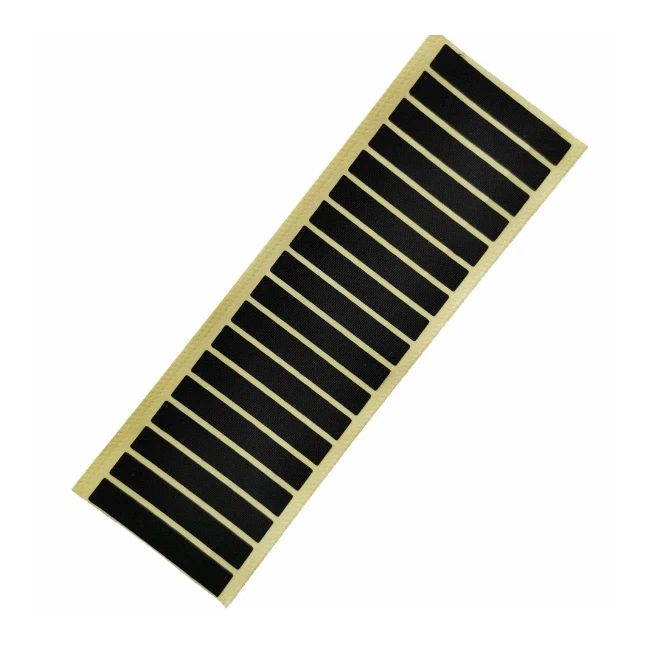
Let's start with what die cut parts are. Simply put, die cut parts are custom - shaped pieces made by cutting materials using a die. These parts can be made from a wide range of materials like plastics, rubbers, foams, fabrics, and more. They're used in countless industries, from automotive to electronics, medical to consumer goods.
Now, let's talk about degradation. Degradation of die cut parts refers to the process by which these parts lose their original properties over time. This can happen due to a variety of factors, and understanding them is crucial for both manufacturers and users.
Environmental Factors
One of the most common causes of degradation is environmental exposure.
Temperature
Extreme temperatures can have a huge impact on die cut parts. High temperatures can cause materials to expand, soften, or even melt. For example, if a die cut part made from a certain plastic is exposed to high heat for an extended period, it might start to deform. This can lead to a loss of dimensional accuracy, which is a big deal in industries where precise measurements are key.
On the other hand, low temperatures can make materials brittle. A rubber die cut part, for instance, might become stiff and crack when exposed to freezing temperatures. This brittleness can reduce the part's flexibility and durability, making it more likely to break under stress.
Humidity
Humidity is another environmental factor that can cause degradation. High humidity levels can lead to moisture absorption in some materials. Take Acetate Cloth as an example. If it's exposed to a humid environment for too long, the cloth might absorb water, which can weaken its structure. This could result in a loss of strength and integrity, and in some cases, it might even promote the growth of mold and mildew.
UV Radiation
UV radiation from the sun can also be a major culprit. Many materials used in die cut parts are sensitive to UV rays. Plastics, for instance, can become discolored and brittle when exposed to UV light over time. This is especially important for outdoor applications, where die cut parts are constantly exposed to sunlight. The degradation caused by UV radiation can make the parts look old and worn, and more importantly, it can reduce their mechanical properties.
Chemical Exposure
Die cut parts can also degrade when they come into contact with certain chemicals.
Solvents
Solvents can dissolve or swell materials. If a die cut part made from a particular polymer is exposed to a solvent that it's not compatible with, the solvent might penetrate the material and break down its molecular structure. This can lead to a loss of strength and a change in the part's physical properties.
Acids and Bases
Acids and bases can react with materials in different ways. Some materials might be resistant to mild acids or bases, but strong ones can cause significant damage. For example, a die cut part made from a metal might corrode when exposed to an acidic environment. This corrosion can weaken the part and eventually lead to its failure.
Mechanical Stress
Constant mechanical stress can also cause degradation in die cut parts.

Wear and Tear
When a die cut part is in use, it often experiences friction and abrasion. For example, a die cut gasket in an engine might be constantly rubbing against other components. Over time, this wear and tear can cause the part to lose its shape and material thickness. As the part wears down, its performance can be compromised, and it might need to be replaced sooner than expected.
Fatigue
Repeated loading and unloading can lead to fatigue in die cut parts. Consider a die cut spring in a mechanical device. Every time the spring is compressed and released, it experiences stress. After a certain number of cycles, the spring might start to develop cracks due to fatigue. These cracks can grow over time, eventually leading to the failure of the part.
Material - Specific Degradation
Different materials used in die cut parts have their own unique degradation properties.
Foams
Foams are commonly used in die cut parts for cushioning and insulation. However, foams can degrade in several ways. They can lose their elasticity over time, especially if they're exposed to high temperatures or chemicals. The cells in the foam can collapse, reducing its ability to absorb shock and provide insulation.
Waterproof Breathable Membrane
Waterproof breathable membranes are designed to keep water out while allowing air and moisture vapor to pass through. But these membranes can degrade if they're exposed to dirt, oils, or certain chemicals. The pores in the membrane can get clogged, reducing its breathability. And if the membrane is damaged physically, it might lose its waterproofing properties.
Die Cut Graphite Sheet
Graphite sheets are used for heat dissipation in electronics. However, they can degrade due to oxidation. When exposed to air, the graphite can react with oxygen, forming graphite oxide. This can reduce the sheet's thermal conductivity, which is its main function.
How to Mitigate Degradation
As a supplier, we understand the importance of ensuring that our die cut parts have a long - lasting performance. Here are some ways to mitigate degradation:
Material Selection
Choosing the right material for the application is crucial. If a part is going to be used in a high - temperature environment, we'll select a material that has good heat resistance. Similarly, for outdoor applications, we'll pick materials that are UV - resistant.
Coating and Treatment
Applying coatings or treatments can also help protect die cut parts from degradation. For example, a UV - resistant coating can be applied to plastics to reduce the impact of UV radiation. A water - repellent treatment can be used on fabrics to prevent moisture absorption.
Proper Storage and Handling
Proper storage and handling are also important. Die cut parts should be stored in a clean, dry, and temperature - controlled environment. When handling the parts, care should be taken to avoid physical damage.
Conclusion
Understanding the degradation properties of die cut parts is essential for ensuring their long - term performance. As a supplier, we're committed to providing high - quality die cut parts that can withstand various environmental and mechanical challenges. Whether you're in the automotive, electronics, or any other industry, we've got the expertise to meet your needs.
If you're in the market for die cut parts and want to learn more about how we can help you with degradation - resistant solutions, don't hesitate to reach out. We're here to have a chat about your requirements and find the best products for your applications. Let's work together to make sure your projects run smoothly with top - notch die cut parts.
References
- Smith, J. (2018). Material Degradation in Industrial Applications. Industrial Press.
- Johnson, A. (2020). Environmental Effects on Die Cut Components. Journal of Manufacturing Science.